🟡Introduction
I once met a couple in Agra sitting on a curb, looking totally shell-shocked. They were sweating through their clothes and looked ready to cry.
They had tried to do Delhi, Agra, and Jaipur in three days, using local buses, in the middle of June. Bad idea. They spent more time fighting with auto-rickshaw drivers and sitting in traffic than actually seeing the monuments.
India is intense. It’s not Europe. The heat hits you like a physical blow when you step off the plane. The noise of the horns is constant. The smells—incense, open drains, frying spices—are overwhelming.
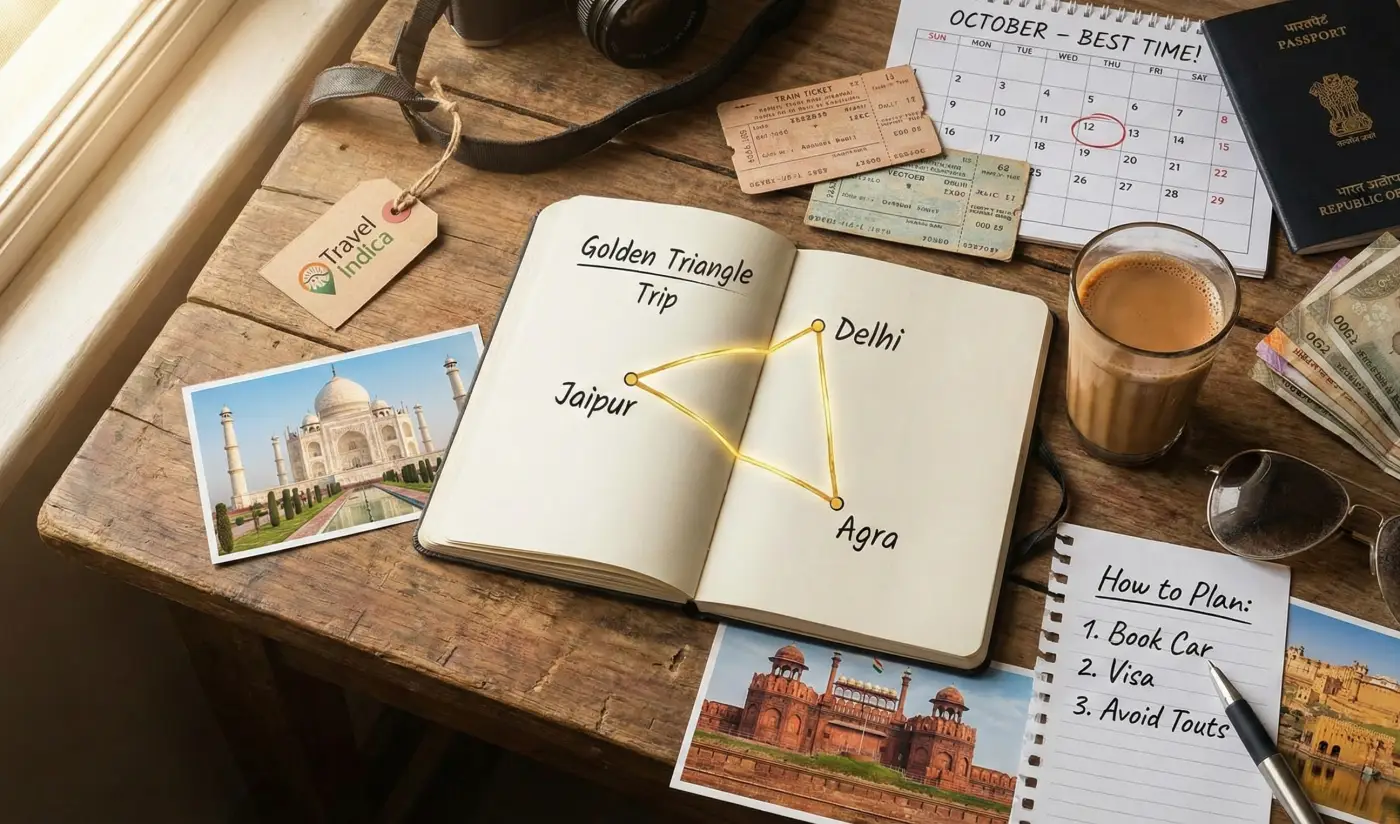
Planning this trip isn’t just about connecting dots on a map. It’s about logistics in a chaotic environment. If you are wondering how to plan Golden Triangle trip without losing your mind, you need practical, on-the-ground advice, not glossy travel brochure pictures.
🟩The Basics (Snippet Bait)
What is the best way to plan a Golden Triangle trip?
To plan a Golden Triangle trip successfully, you must prioritize timing (October to March is best), allocate at least 6-7 days to avoid burnout, and pre-book reliable inter-city transport (a private car and driver is highly recommended for first-timers). Don’t try to “wing it” upon arrival.
A Step-by-Step Guide on How to Plan Golden Triangle Trip
This route is the classic introduction to India. But “classic” doesn’t mean easy. Here is the reality of golden triangle planning.
Step 1: Timing is Everything (Seriously)
Don’t ignore the weather reports.
- Summer (April–June): Just don’t. It hits 45°C (113°F). The red sandstone at the forts gets so hot you can feel it through your shoes. You will be miserable.
- Monsoon (July–Sept): Humid. Very sweaty. But greener and cheaper.
- Winter (Oct–March): The sweet spot. Pleasant days, cold nights. But be warned: December and January often have thick fog that delays trains and flights for hours.
Step 2: The Itinerary (Stop Rushing)
The biggest mistake Western travelers make is trying to do too much. “Oh, it’s only 250km between cities, that’s a 3-hour drive, right?” Wrong. In Indian traffic, with cows on the highway and random jams, that’s a 5 to 6-hour drive.
If you try to do the whole triangle in 4 days, you will spend 80% of your trip in a car. Give yourself 6 to 7 days minimum.
💡 Local Tip: Plan for an extra day in Jaipur. It’s the best city for just wandering around bazaars, buying textiles, and eating street food. You’ll need a “chill day” after the intensity of Delhi and Agra.
Step 3: Locking Down Transport
This is the hardest part of itinerary planning. You have two main options:
- Trains: The real Indian experience. Cheap, chaotic, and fun. But booking tickets as a foreigner is a bureaucratic nightmare on the IRCTC website. Plus, trains get delayed a lot.
- Private Car & Driver: The easiest option. Door-to-door service, working AC, and you can stop whenever you want for chai or a photo. It costs more, but the sanity saved is worth it.
- Internal Link: Not sure about driving? Check out our Private Car & Driver Services for safe, vetted options.
Step 4: Accommodation
Book ahead. Don’t arrive in Delhi at 11 PM and tell a taxi driver to “take me to a good hotel.” You will end up in a flea-ridden overpriced dump that pays him a commission. Use reliable booking sites and read recent reviews.
🔷 THE “SCAM ALERT”
The “Emporium” Stop This is the most common trap during a Golden Triangle trip.
You hire a taxi or auto for the day. The driver seems super nice, maybe even offers you a cigarette. Then, halfway to the fort, he says, “Sir/Madam, let’s stop for 10 minutes at this government handicraft shop. Very good quality, just looking, no buying pressure.”
The Truth: It is a high-pressure private shop that pays the driver a massive commission (sometimes 40%). The prices are inflated by 300%. If you don’t buy anything, the driver’s friendly attitude will vanish instantly.
The Fix: Be firm from minute one. Tell the driver: “No shops. Only monuments and hotel.” If he insists, threaten to get out and find another cab.
🟥 THE SOFT SELL
Look, you can absolutely plan this trip yourself. Navigating the Indian Railways website is practically a rite of passage, and haggling with rickshaw drivers is an adventure in itself. Millions do it.
But if that sounds like too much work for a holiday, and you just want to soak in the history without the daily logistical battle, we can handle it. We provide safe AC cars, honest drivers who know the routes and don’t pull the shopping scam, and solid local support if things go sideways.
Check out our customizable 6-Day Golden Triangle Itinerary here.
🟠 FAQs
How much does a Golden Triangle trip cost? It varies wildly. You can backpack for $40 a day, or do luxury Taj hotels for $600 a day. A comfortable mid-range trip with a private car usually runs about $150-$200 per person, per day.
Are there any crucial golden triangle tips for health? Yes. Only drink sealed bottled water (check the seal). Eat hot, freshly cooked food at busy restaurants. Avoid cut fruit or salads on the street that might have been washed in tap water.
Is it safe for solo female travelers? Yes, many women do it. But you need to be street-smart. Dress modestly (shoulders and knees covered) to avoid stares. Don’t walk alone in isolated areas at night. Hiring a reputable private driver adds a big layer of safety.
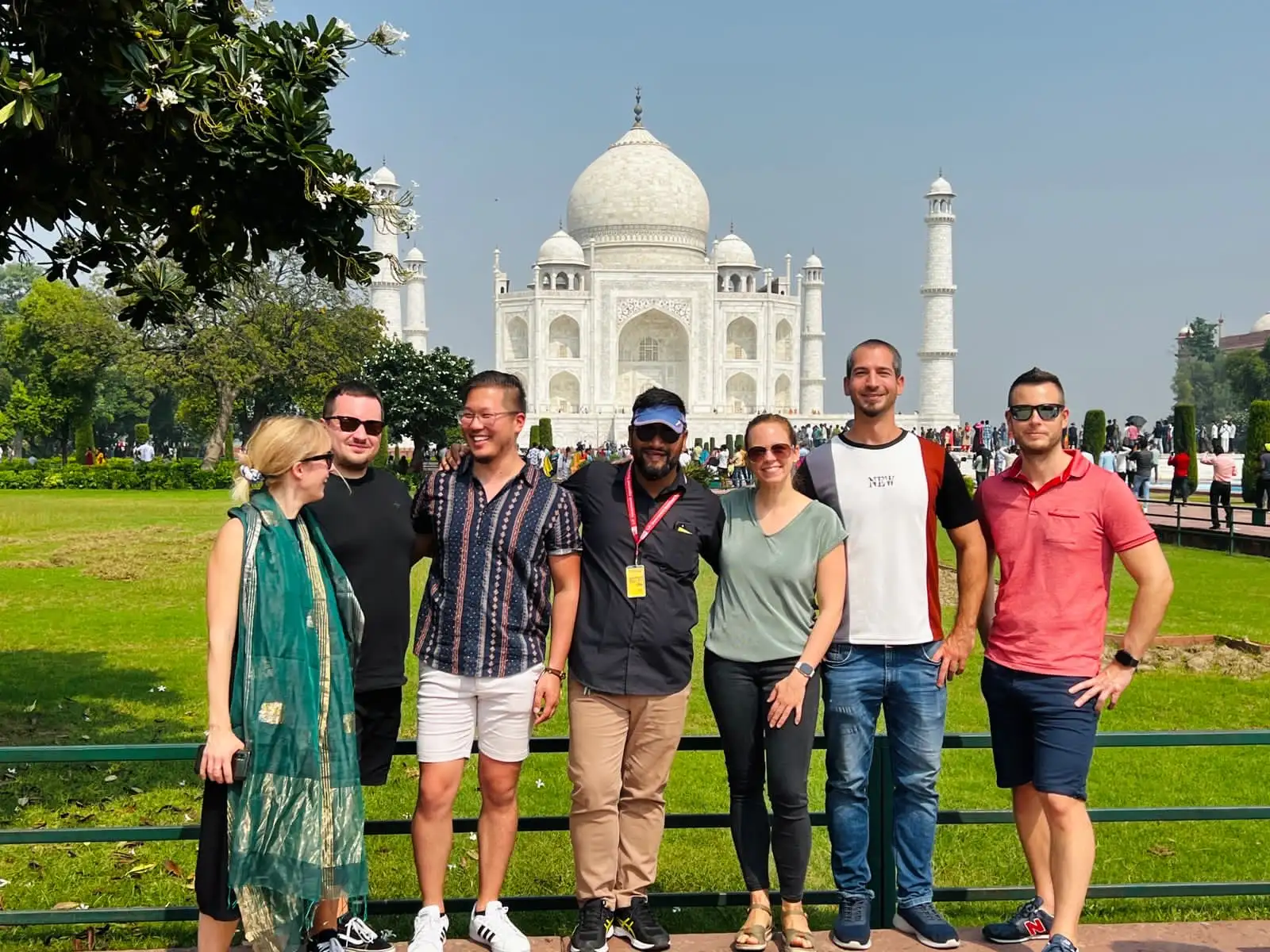
Do I need guides at the monuments? It helps. The history is dense. But only hire government-approved guides (they wear IDs). There are many touts outside the Taj Mahal pretending to be guides who just want to rush you through and take you shopping.
🟤 CONCLUSION
Figuring out exactly how to plan Golden Triangle trip logistics is half the battle won.
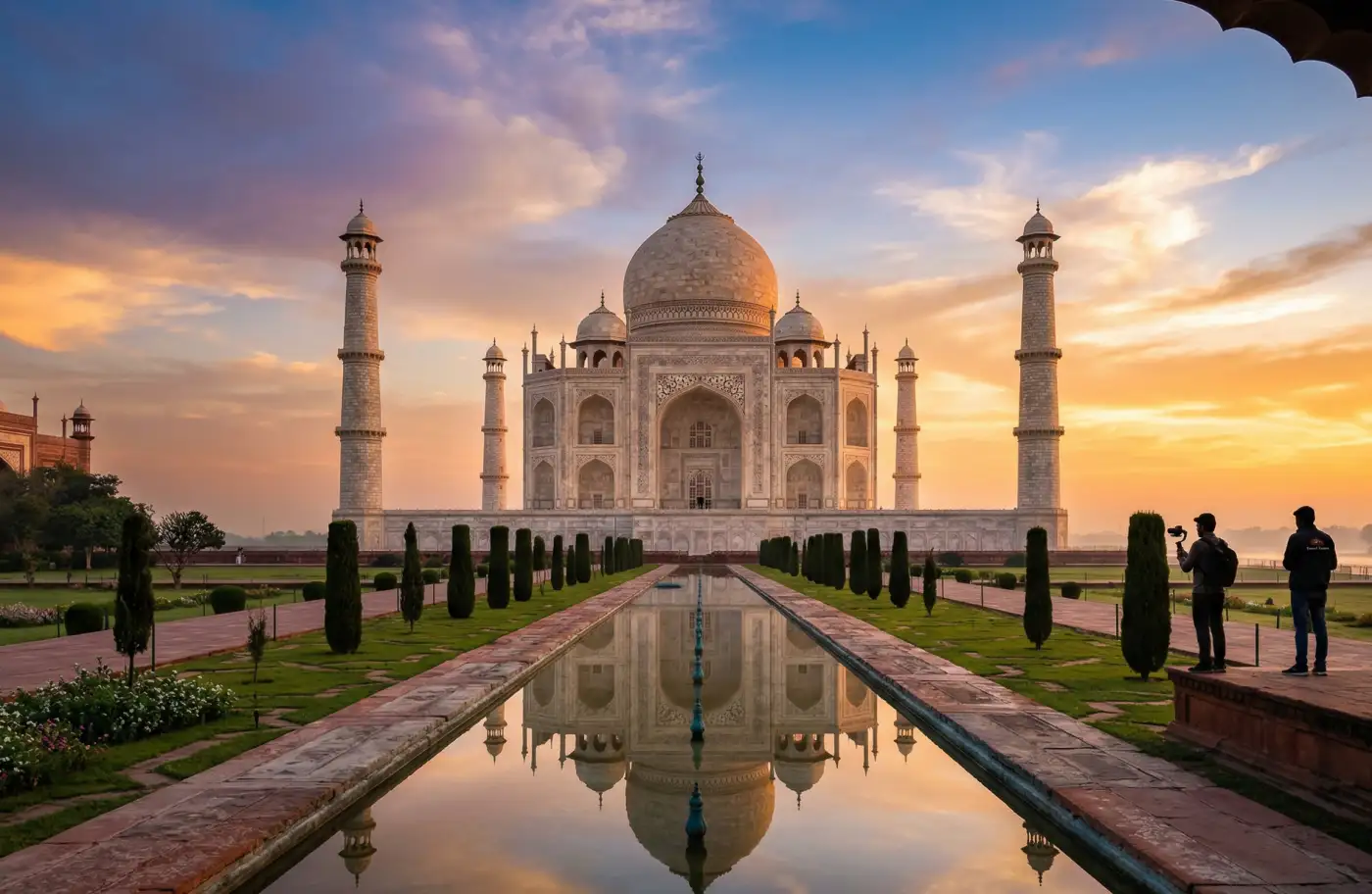
Once you arrive, it will be chaotic, loud, and sometimes frustrating. You might get diarrhea. You will definitely get honked at. But then you’ll see the sun rise over the Taj Mahal, or eat the best butter chicken of your life in Delhi, and it all makes sense. Just come prepared, and bring a sense of humor.
Still confused about the route? WhatsApp us directly. We’re local, and we’re awake.